

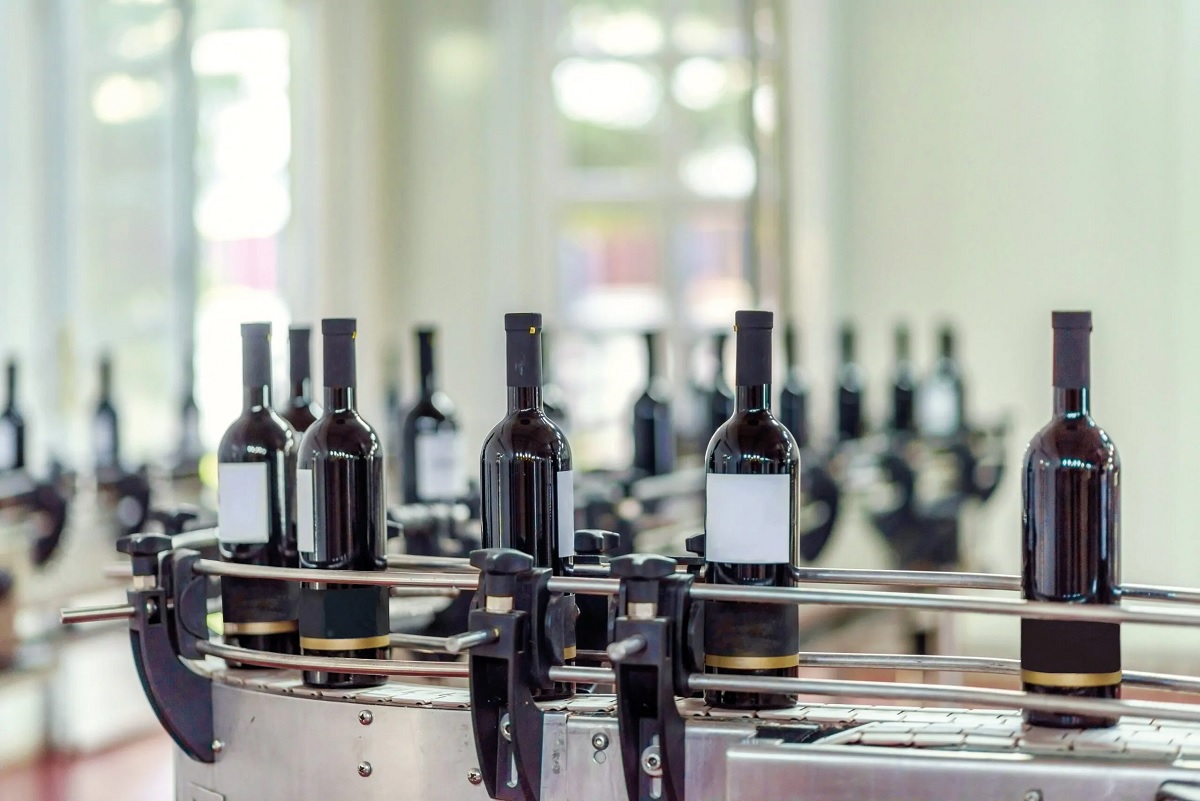
Expansion will lead to improvements in your winery – increased production, more uniformity, more supervision. However, this is not always the case. The manual inspections which were sufficient when producing 5,000 cases per year, begin to fail when producing 50,000, and this is seen on the bottling line.
The scale-up trap which most wineries don’t expect
Smaller producers can maintain quality in their production by taking advantage of the senses and experience of their workers. e.g., a manager can visually estimate the amount of product in a container, manually determine the tightness of a cork, or recognize a problematic batch before finalizing the product. These methods are effective since the producers are packaging around a few hundred cases per week and the employees have years of experience using their senses.
When production volume increases, it is difficult to ensure quality since these sensing abilities are only efficient at a small scale, and many deviations are overlooked. To solve this issue, producers often speed up the line to increase the production rate, and delegate responsibility to new employees that don’t have the same experience as the more senior employees. In the end, the fill levels are subtly off, the lids are overly tight, or a bad batch passed all the way to distribution, and buyers notice this when they find a broken product and send back an entire order.
Eventually, in-depth assessment with actual instruments will take some time to perform or, worse, won’t be conducted.
What actually goes wrong on the line
There are a few ways that bottling mistakes reveal themselves, none of which are good in the short or the long term.
Take oxygen ingress, that’s the “silent” killer of wine quality. A slightly relaxed seal lets in a little bit more O2 than the winemaker intended, and the wine begins to oxidize at a slightly faster rate than planned. You don’t see this right away at the bottling line, you see it a year and a half later when a customer pulls a screw cap or a synthetic cork or a Nomacorc expecting a fresh bottle and finds something flat and uninteresting.
Fill height is the most obvious of the three, but still expensive. A fill level at the shoulder or even the neck that’s too low or, conversely, too high wastes product and is 100% apparent to absolutely anyone sampling your goods. Depending on the markets you are in, compliance can also be an issue.
Torque variance, that is, how much force it requires to extract a cork, seems minor until you realize that, for many customers, it is their first physical interaction with your wine. A difficult cork will put them in a bad mood right away. A loose cork will also leave a bad impression and there may not even be any wine in their glass yet. And, of course, there is the problem of TCA, of cork taint, which is estimated to affect between 2% and 7% of bottles closed with natural cork – it makes the wine smell musty and undrinkable, and is one of the primary reasons consumers send product back.
In every case, you can start the trace back to the earliest part of the production chain, and if there is a hiccup there, then expect more down the line.
Corks are the highest-variance part in your entire operation
Every other component on your line is manufactured to tight, repeatable tolerances. Glass bottles come out of a mold. Labels are printed to spec. Capsules are stamped from consistent material. Cork is different, it is a natural product, cut from bark that varies by tree, by region, by the harvest year. Density, grain structure, and moisture content all shift from lot to lot, and these shifts affect how a cork seals, how it compresses, and how much torque it takes to remove.
This is exactly why closure sourcing deserves more scrutiny than its normally given. A winery that spends months qualifying a glass supplier, but treats cork as a commodity purchase, is optimizing the wrong variable. Supplier qualification for corks, checking dimensional tolerance, moisture testing, batch-to-batch consistency, matters more than almost any other procurement decision on the production side, because cork is the component most likely to introduce variance you can’t see until the bottle’s already sold. Sourcing from a supplier that treats wine corks as an engineered component rather than a raw agricultural product is one of the more direct ways to reduce that variance before it ever reaches your line.
And this isn’t an argument against natural cork, it’s an argument for treating it with the same rigor you’d apply to any other high-variance input in a manufacturing process.
From physical inspection to production data
Throughout most of the industry’s existence, quality assurance was human intervention – counting fill levels by the eye, gauging torque by hand, visually examining corks for flaws. This method isn’t scalable and it doesn’t give you a tangible record for future reference or analysis.
The overall change that is occurring in manufacturing, wine included, is the replacement of physical inspection by production records. Instead of depending on an individual’s decision at the time, wineries are computerizing the details themselves: cork diameter, length, moisture level, fill height specifics, and torque levels. Every detail will be a number with an acceptable range, tracked continually rather than investigated once and overlooked.
This is important since the details that data reveals are not visible during a single examination. One cork outside of the requirements wouldn’t be out of the ordinary. A set of twenty corks outside the specified limit that originate from the same batch and appear on the control list, is a supplier problem that you can identify and resolve before it affects a large number of bottles.
Statistical process control turns the line into something measurable
While statistical process control has been around for a long time, many medium-sized wine facilities still don’t use it. The concept of tracking key measurements over time – fill height, torque, cork dimensions – and plotting them on a simple control chart, works fine. When a measurement starts drifting outside expected limits, you see it before it becomes a defect.
This is the difference between reactive and proactive quality management. A winery without SPC finds out about a problem when a customer complains or a distributor sends back a pallet, by the time they’ve done so it’s too late to do anything about that batch. A winery running control charts on their bottling parameters catches the drift while it’s still a minor deviation, adjusts the line or flags the cork lot, and never ships the bad batch.
You don’t need a massive software investment to start. Even a shared spreadsheet with fill height and torque readings logged every hour, reviewed daily, gets you most of the benefit. The discipline matters more than the tool.
Traceability is what saves you when something slips through
No system is flawless. Despite having good SPC and reliable supplier qualification, an inferior cork lot may slip through the cracks from time to time. The key difference between the wineries that manage this occurrence well, and those that don’t, is traceability.
For instance, if a customer complains about a moldy-smelling wine six months after its release, you need to be able to determine which cork lot was used during the bottling run of that specific wine, as well as the glass lot and fill session. If you don’t have that linkage, then it’s all guesswork. However, if you do have it, you can access the cork batch records, verify the defect trends, contact the supplier, and even identify other bottles of wine that were sealed with the same lot, if necessary, before the issue spreads on a larger scale.
Lot traceability includes connecting the data at the component level to the finished product. This means that you need to track and record which cork batch, glass lot, and capsule run were utilized during each bottling session. This information needs to be stored somewhere so that it can be easily retrieved. Production or manufacturing execution systems are quite effective in managing this process on a larger scale. However, even a simple but well-maintained batch log spreadsheet can efficiently serve this purpose for a mid-sized facility that is not yet ready to implement a full MES solution.
Practical steps for a mid-sized winery
You don’t need to change everything all at once. A couple of specific actions will bring you most of the way.
First, define written specs for each closure type: what diameter and length measurements are acceptable, what the maximum and minimum %MC is, and whether there are any visual defect thresholds. If you don’t have that on paper, the door is wide open for any supplier to lowball you on quality since real quality is whatever the person checking at the end of the line decides it is that day.
Next, build incoming inspection around those specs. Calipers for dimensional checks, a moisture meter for cork, and a simple sampling plan – checking a percentage of each incoming lot rather than every single cork – catches problems before they ever reach the line.
Digitize your batch records, even in a basic form. A spreadsheet that ties bottling date, cork lot number, glass lot, and fill session together is enough to give you traceability without a major software purchase.
IoT sensors on the line itself – tracking speed, fill pressure, and torque in real time – are a natural next step once the basics are in place, feeding a dashboard instead of relying on manual logs.
The screw cap question
Screw caps provide a level of mechanical consistency that natural cork can’t match. For high-volume commercial wines, the benefits of switching to screw caps are quite compelling – they are made to exact tolerances, have zero TCA risk, and provide the same level of sealing performance from one bottle to the next. Overall, this can be a real advantage.
For a premium producer making the choice to stick with natural cork, there is nothing wrong with this logic. Cork has a strong image, especially among consumers, and, for wines that are designed to age, natural cork allows a small and consistent amount of oxygen to go through the closure and many winemakers believe this leads to superior long-term wine development.
However, if image and oxygen transfer are your reasons for sticking with cork, then you must match the level of mechanical consistency that screw caps give you for virtually no effort. In practice, this means working closely with your cork supplier to ensure that you are receiving the most consistent product possible, monitoring moisture and dimensions more closely, and putting control charts on every batch. The data doesn’t make the cork any more consistent – it just gives you the visibility to manage cork’s natural variability so that you aren’t surprised by it after the fact.
Consistency is an organizational problem, not just a technical one
Yes, the equipment and the data systems matter, but they are enablers, not drivers. The procurement team must work with production to define what “acceptable spec” means, and your head of quality must be empowered to stop a batch when those incoming corks aren’t up to snuff, even if that blows your schedule. And, the production team must trust the data and the specs enough to act on them and not just override them to keep the line moving.
Most successful wineries get this operational alignment right before they get the technology right. The best dashboard in the world is completely meaningless if the people looking at it don’t agree on and/or don’t have the authority to decide what counts as a problem and what happens next.
Your bottling line will always be the place where every good upstream decision either holds or falls apart. Corks account for the smallest share of the cost of a bottle of wine but are the most likely thing to expose that gap, which is why I believe they get the least amount of attention. Get the data, get the discipline, and the line stops being a liability as you grow. It becomes the proof that you actually can.
Comments are closed.