
Enhancing Financial Data Security Through Artificial Intelligence: A Strategic Imperative


The safeguarding of financial data has become a non-negotiable priority in the modern digital business landscape. As enterprises grow more reliant on cloud storage, interconnected software systems, and remote work infrastructures, the need for advanced data protection mechanisms has intensified. Confidential financial records, sensitive client information, and internal performance data are all prime targets for cybercriminals. These assets not only fuel an organization’s operational capabilities but also influence its reputation and compliance status.
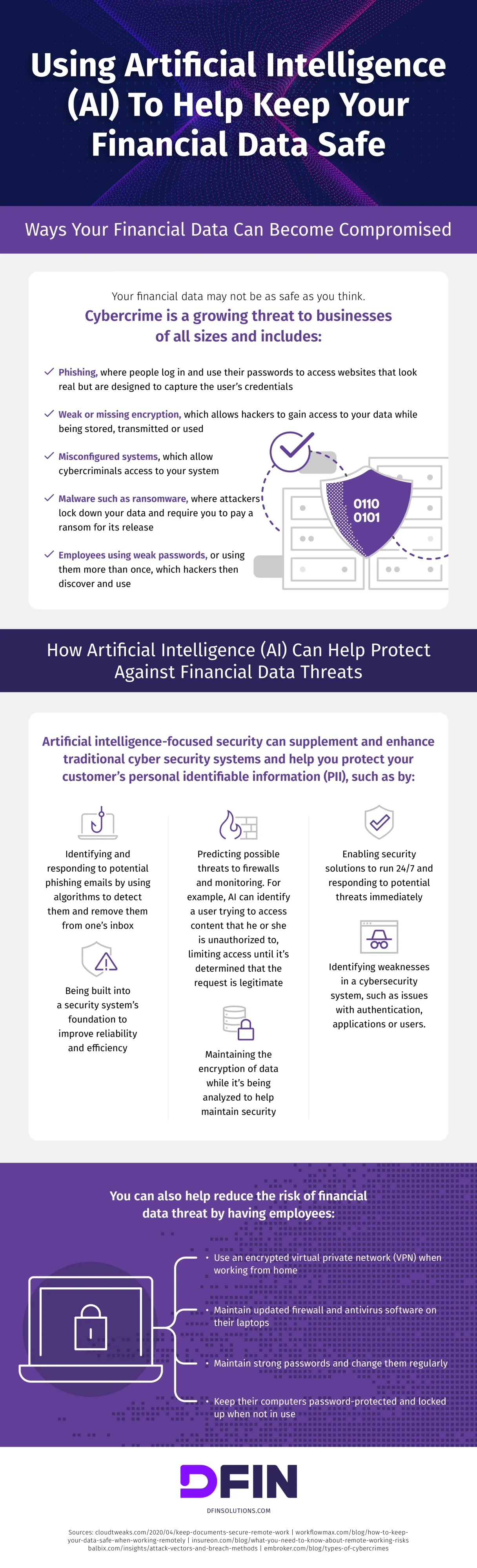
While traditional cybersecurity measures—such as firewalls, antivirus software, and user-access controls—are still necessary, they are no longer sufficient on their own. The rise in social engineering attacks, ransomware, credential theft, and data manipulation has exposed the limitations of static, rules-based defenses. Cybersecurity today requires agility, foresight, and the ability to respond in real time. This is where artificial intelligence (AI) makes a transformative impact.
AI-powered cybersecurity tools operate by continuously learning from historical data and user behavior patterns. They don’t simply execute pre-programmed rules; they adapt and improve over time. This allows them to detect anomalies that may signify an impending attack. For instance, an AI system can analyze login patterns and alert administrators if there’s an attempt to access the system from an unfamiliar location or device. It can also detect unusual data movement within internal systems, indicating possible insider threats or malware activity.
One of AI’s standout strengths is its ability to combat phishing and spear-phishing attacks. By scanning the context and structure of emails, AI models can differentiate between legitimate communication and fraudulent messages designed to harvest login credentials. These systems can prevent such emails from ever reaching the intended recipient, thereby closing a major vulnerability in most organizations’ defenses.
Furthermore, artificial intelligence strengthens encryption protocols by ensuring compliance and maintaining secure transmission standards across the network. AI can identify if data is being transferred through unsecure channels and block such actions proactively. This is especially crucial in sectors that manage significant volumes of sensitive data—like finance, healthcare, and legal industries—where regulatory non-compliance can lead to heavy penalties.
For businesses involved in strategic financial transactions, the role of AI becomes even more pronounced. Take M&A Software as a case in point. Mergers and acquisitions involve vast amounts of confidential data being shared across multiple parties, sometimes over extended periods. Embedding AI within such platforms allows for continuous risk assessment, automated permission controls, and real-time threat detection—offering a highly secure environment for due diligence and negotiations.
Comments are closed.